Meta can put Kairos11 and Karman11 in front of the planners and carbon leads your referrals don’t reach. A 6-month test would show whether they book calls.
06 · KARMAN11Your cleanest supplier gets the same carbon score as your dirtiest.
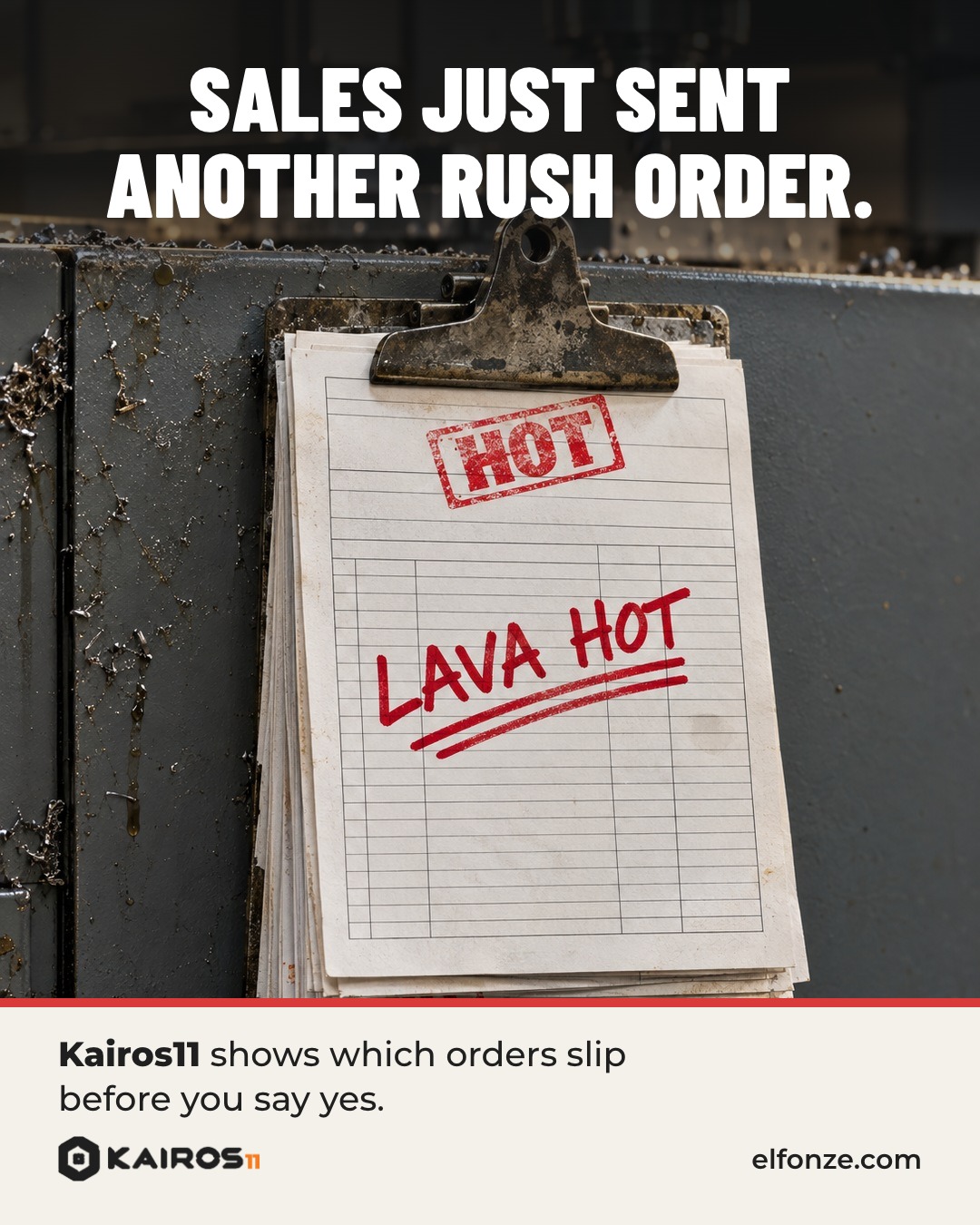
03 · KAIROS11Sales just sent another rush order.
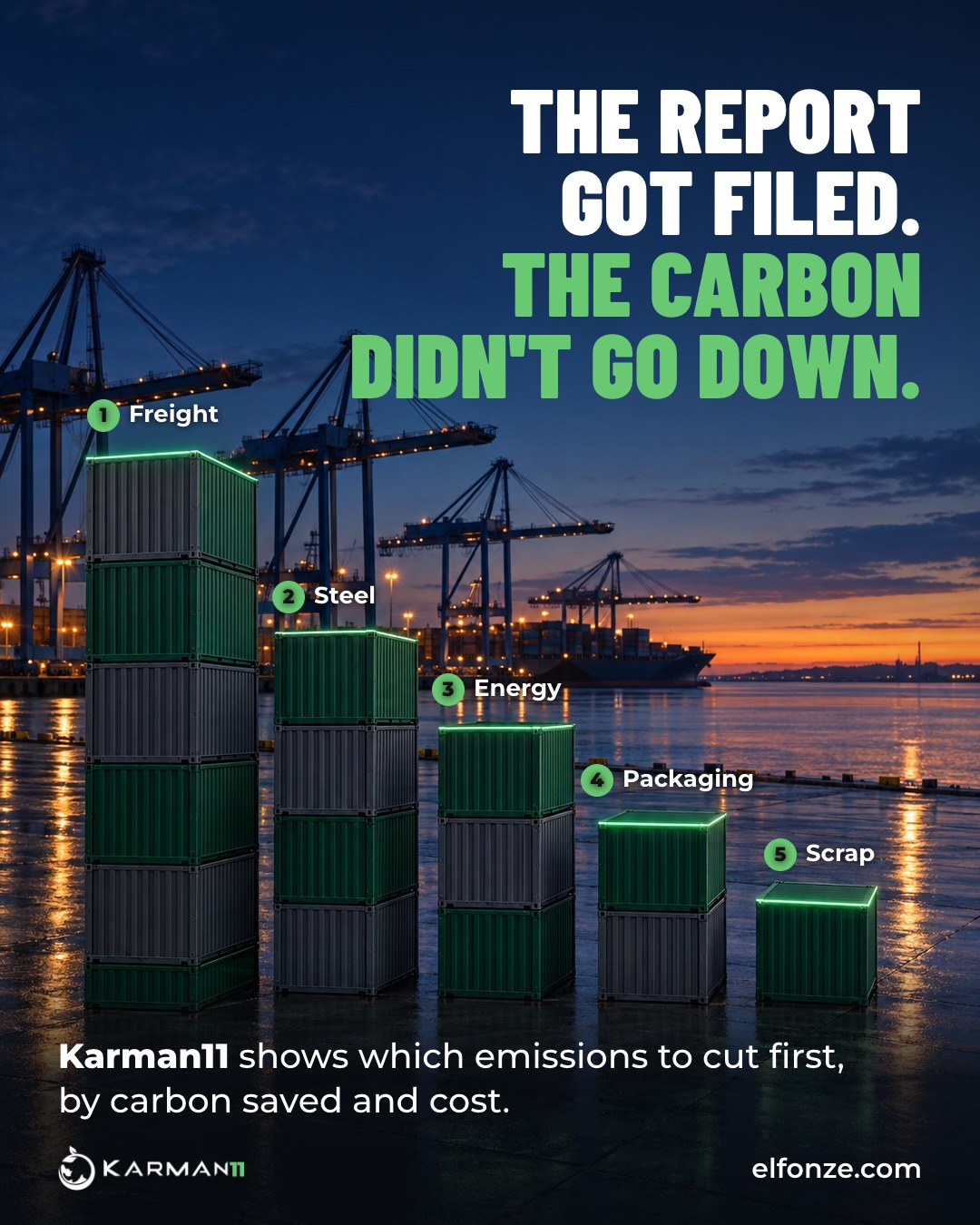
12 · KARMAN11The report got filed. The carbon didn’t go down.
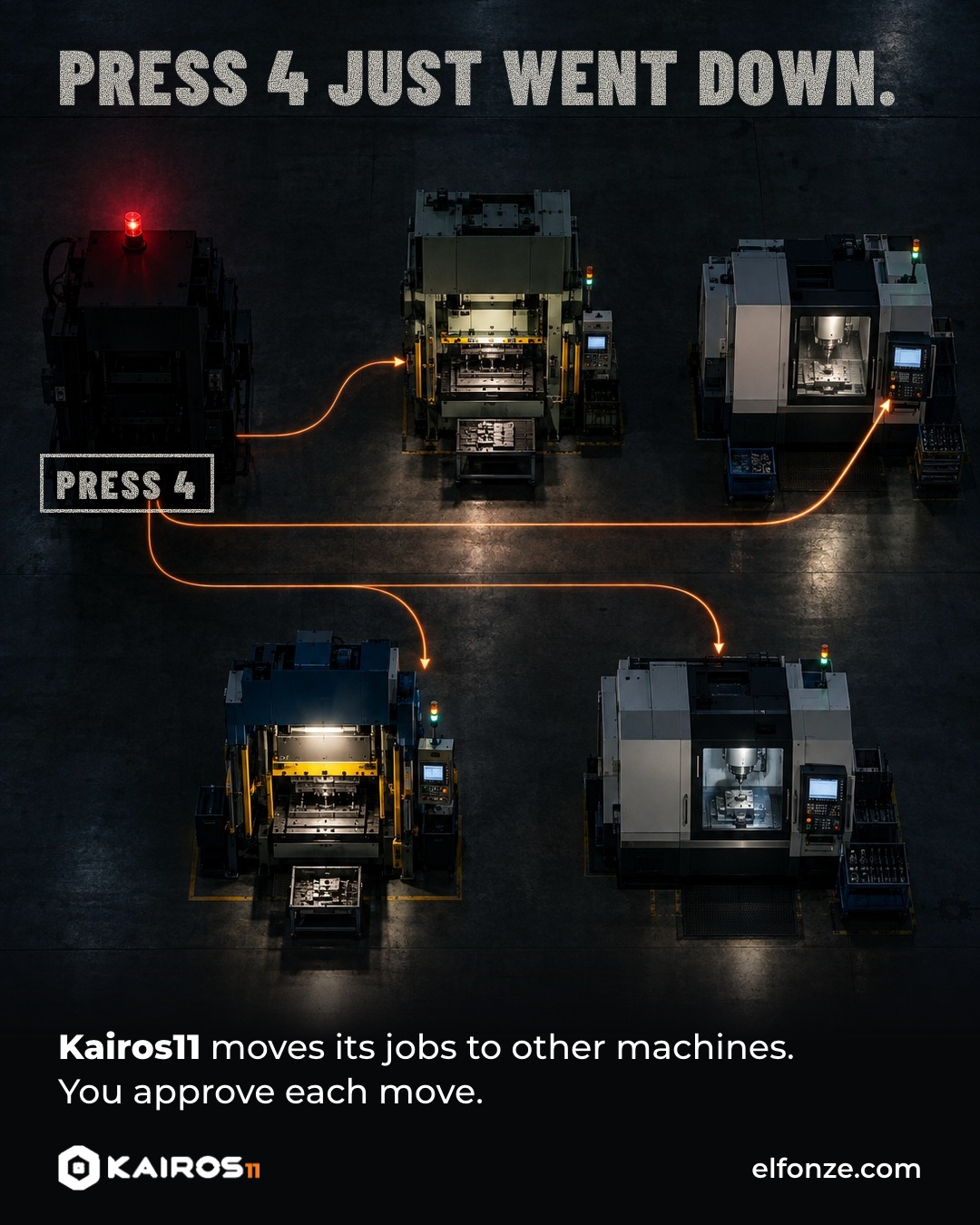
07 · KAIROS11Press 4 just went down.
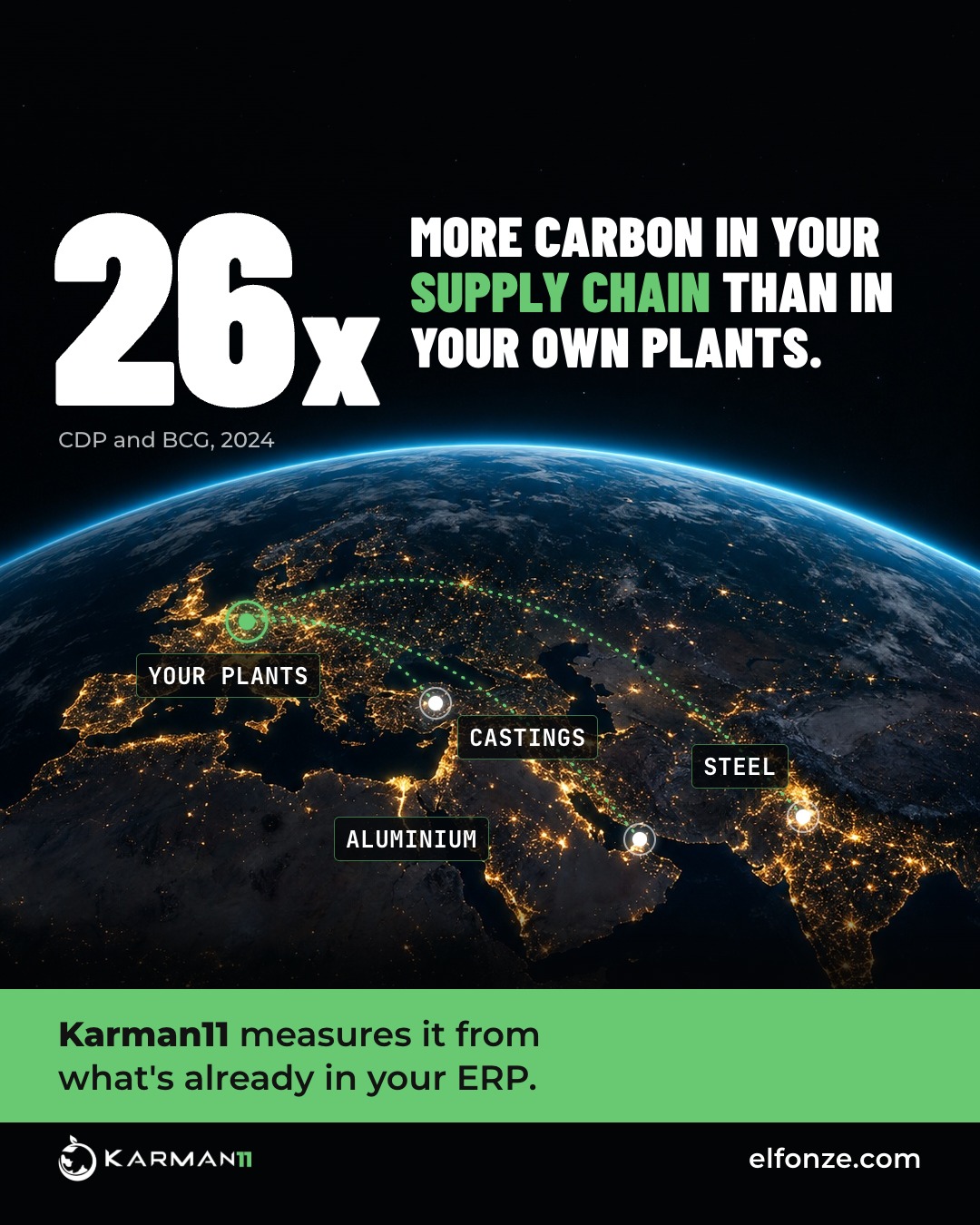
14 · KARMAN1126× more carbon in your supply chain than in your own plants.
We checked 13 production scheduling and ERP brands and 14 carbon accounting brands, and six have run Meta ads. The platform and regulation ads ran for days or months. MRPeasy’s ads asked the questions a manufacturer types into a search bar, or told a customer’s story, and kept running from March 2024 to October 2026. None of the 27 had an ad live when we checked on November 19. The chart counts every ad the library has seen from each, live or not.
A search bar with five questions a manufacturer types, like “how soon will the order be finished?”, then one line on what MRPeasy does. About 45 more of its ads, customer case studies, ran 900 days or more each.
“Discover the number 1 Carbon Management Platform in the world” with a dashboard screen, and “Stay CSRD Audit Ready”.
“Unleash innovation with 3DEXPERIENCE platform on the cloud” and a German medtech e-book. The DELMIA mentions ran 18 days at most.
“Built for Climate Disclosure.” with a California outline, timed to the state’s disclosure rule.
Source: Atria’s copy of the Meta Ad Library, pulled November 19, 2026. Atria shows ads it has seen, not spend, and a brand can run ads under a parent page Atria doesn’t link. Before relying on any count, check the Meta Ad Library directly.
We read Reddit threads where production schedulers, planners and sustainability, finance and procurement people talk about the work. Every quote is copied as written, typos included. Pulled November 19, 2026.
Schedulers on Reddit mock “agentic AI” and “optimize”, and they don’t trust software that acts on its own. So the Kairos11 ads keep the scheduler in charge: a plain-language reason for every job that moves, and you approve each move, which is how your one-pager describes it. The word “agentic” stays off the art.
Carbon leads talk about numbers they can defend
and knowing where it came from
. “Audit-ready” is the vendor word, and every carbon tool uses it. So the Karman11 ads use the buyers’ words: every figure traced to its source, and a number that holds up when the auditor asks.
Sources: public threads on r/manufacturing, r/supplychain, r/carbonaccounting, r/sustainability, r/procurement, r/Accounting and r/exportersindia, pulled November 19, 2026. Thread links are in our research file. Vendor posts were left out.
Every contract so far came from people who already knew you. Meta lets us put Kairos11 and Karman11 in front of schedulers and carbon leads who have never heard of Elfonze.
The first number we’d chase is a lead: someone who fills in the demo form. Contracts come later.
The ads go to the scheduler and the sustainability lead who live with the problem, and ask them for a demo. That way the request reaches the CIO from someone on their own team.
Both products sit on top of the ERP the customer already runs, and a person approves every change. The ads say both, because both make yes a smaller risk.
We agree, so the math below runs over 6 months. In the first weeks we’d judge ads on cost per lead and calls booked, because those come in long before a contract does.
Close rate and time to close get measured as deals move. Neither of us has those numbers yet.
The ad copy does the targeting. Each ad names the job and the problem in the buyer’s words, like ad 05: “Blamed for moving the schedule again.”
Meta reads the copy and shows the ad to more people like the ones who stop for it, whatever their job title says on Facebook.
We don’t know your cost per lead or your close rate, and nobody can until ads run. So here is the arithmetic at three costs per lead, on the $5,000 a month Janet suggested on the call.
| $50 a lead | $100 a lead | $150 a lead | |
|---|---|---|---|
| Meta spend a monthpaid to Meta | $5,000 | $5,000 | $5,000 |
| Leads a month | 100 | 50 | 33 |
| Leads over a 6-month test | 600 | 300 | 200 |
| Ad spend per contractif 1 in 100 leads signs, Janet’s example on the call | $5,000 | $10,000 | $15,000 |
$5,000 ÷ $50 = 100 leads; ÷ $100 = 50; ÷ $150 = 33. Six months is six times that. The 1 in 100 is an example, not your close rate.
A full 6-month test is $78,000. Two contracts at the bottom of your $45K to $65K range come to $90,000, which covers it with $12,000 left over.
How we worked it out: contract values ($45K to $65K a year per licence) are from the November 17 call, where you said pricing for both products is still being finalized. $5,000 a month and about $166 a day are the figures Janet gave on the call ($5,000 over 30 days). The $50, $100 and $150 costs per lead are our planning range, not a benchmark or a promise: the first weeks of the test set the real number. No results are guaranteed.
The first set is the 14 ads on the work page, 7 for Kairos11 and 7 for Karman11. After that, Starter delivers 8 new concepts a week, split between the two products by cost per lead and calls booked.
Access to your Meta account, the landing pages and how your team logs booked calls.
The 14 spec ads, with your changes, go to you for approval.
Same budget on each to start, so the data decides the split.
You get the brief early in the week and approve it. The ads are made by Wednesday or Thursday and go live as soon as you approve them. About a 7-day loop.
What ran, what it cost per lead and booked call, and what we brief next.
Janet offered on the call to define your KPIs and build the dashboard around them. These are the four we’d start with.
On the split. Janet suggested on the call weighting one product, two ads to one and six to the other. With no data on either yet, we’d start at 7 and 7 and let the first weeks decide which product gets more of the 8 a week.
One thing to sort before launch. Karman11 isn’t on elfonze.com yet. Both products need a landing page with the demo form before their ads run. We can build them (the landing pages add-on below), or your team can.
You asked for examples your partners could look at. These are the two Janet gave. Client names stay off the page.
Our standard pricing, the same as selfmade.co. You’d start on Starter, with us running your ads.
Done-for-you media buying, with a dashboard of spend against leads and booked calls. Lead campaigns for each new buyer we test, and spend moved to the ads that book calls. 7% of monthly ad spend, or $2,000 a month under $30K in spend.
A review with our media team every two weeks. We plan the account with you and your team keeps running it.
We design, build and iterate landing pages against the winning ad concepts, so a scheduler who clicked the sticky-note ad lands on a page about exactly that, with the demo form right there.
We’ll go through the math and the 14 ads. Reply with a few times that suit the partners.